Introduction
The way people consume books has transformed dramatically in the digital age. While paper books will always carry a sense of nostalgia and charm, the convenience of digital reading has opened new doors for millions of readers across the world. Among the most popular devices for digital reading are eReaders. Unlike tablets or smartphones, eReaders are specifically designed for extended reading, with features like glare-free displays, long-lasting batteries, lightweight design, and a focus on words rather than distractions.
As eReaders have evolved, they have begun to cater to a wide range of readers, from casual users who occasionally pick up a novel to devoted book lovers who devour several books a week. Each major eReader brand offers its own advantages, whether it is affordability, durability, display quality, or a massive selection of available titles. Comparing the best eReaders helps both first-time buyers and experienced users understand which device will suit their personal reading habits the most.
In this blog, we will examine the best eReaders in the market, their strengths and weaknesses, and how they differ in performance, design, and features. This exploration will highlight not just which devices stand out, but why they matter to different kinds of readers.
What Makes an eReader Different from Other Devices
Before comparing the best eReaders, it is important to understand why they exist as a separate category of technology. At first glance, many wonder why they should invest in an eReader when smartphones and tablets can also display eBooks. The answer lies in the unique characteristics of eReaders.
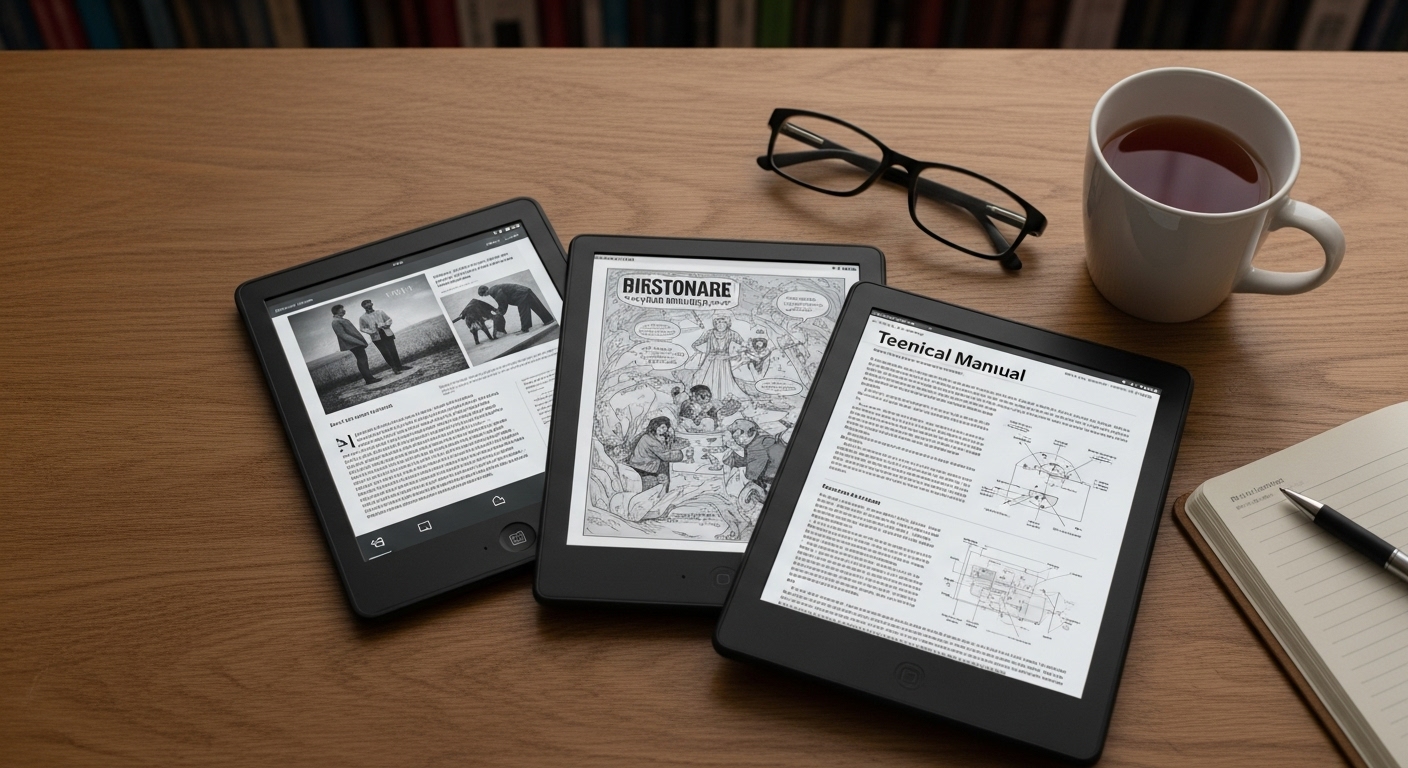
Most eReaders use E Ink technology, which mimics the look of ink on paper rather than producing the bright backlit display of tablets or phones. This makes reading much more comfortable for the eyes, especially during long sessions. It also significantly reduces glare, allowing readers to enjoy books outdoors under direct sunlight. Additionally, the power efficiency of E Ink means that eReaders can last for weeks on a single charge, compared to a day or two for most smartphones.
Unlike multi-purpose devices, eReaders are distraction-free. They are not built for endless notifications, games, or social media scrolling. Instead, their design revolves around providing an immersive reading experience. This focus allows readers to lose themselves in stories without interruptions, making eReaders an invaluable tool for anyone who values deep reading.
Amazon Kindle: The Pioneer of eReaders
When talking about eReaders, the conversation inevitably starts with Amazon Kindle. As the pioneer of mainstream eReaders, Kindle set the standard for digital reading devices and continues to dominate the market.
Amazon’s Kindle lineup offers a range of devices, from the basic Kindle, which is affordable and accessible, to the more advanced Kindle Paperwhite and Kindle Oasis. The Paperwhite has long been the most popular choice, balancing affordability and premium features like a high-resolution screen, adjustable front lighting, and waterproofing. For readers who crave luxury, the Kindle Oasis offers a sleek design, ergonomic page-turn buttons, and an even more advanced display.
What makes Kindle stand out is not just the hardware but also the massive ecosystem that Amazon has built around it. With access to one of the largest eBook libraries in the world, readers can choose from millions of titles at their fingertips. Additional services like Kindle Unlimited and integration with Audible further enhance the experience by offering subscriptions and audiobooks.
However, the dominance of Kindle comes with limitations. Kindle devices are tied to Amazon’s ecosystem, meaning users have less freedom to buy eBooks from other providers. Still, for readers who want convenience, selection, and reliability, Kindle remains a top choice.
Kobo: The Competitor for Dedicated Readers
While Amazon may dominate the eReader market, Kobo has established itself as a strong alternative. Owned by Rakuten, Kobo’s devices are designed to prioritize open access and user freedom. Kobo eReaders support a wide range of file formats, giving readers flexibility to upload eBooks from various sources. This makes them attractive for readers who do not want to be locked into a single marketplace.
Kobo’s lineup includes models like the Kobo Clara HD, which serves as an entry-level device with a sharp display, and the Kobo Libra and Kobo Sage, which introduce ergonomic designs and additional features. Kobo is also known for its larger screen devices, such as the Kobo Elipsa, which supports note-taking with a stylus.
One of Kobo’s greatest strengths is its partnership with libraries around the world. Through its integration with library lending systems, users can borrow eBooks directly from their local libraries, often with just a few taps. This feature is especially appealing for readers who want affordable access to a steady stream of books.
Kobo may not have the same global brand recognition as Kindle, but for many serious readers, its openness and library-friendly features make it a powerful competitor.
Barnes & Noble Nook: The Traditional Bookstore’s Digital Effort
Barnes & Noble, the largest bookstore chain in the United States, has also created its own line of eReaders known as Nook. Designed as an extension of its bookstore experience, Nook devices offer readers the chance to combine digital convenience with the familiarity of a traditional retailer.
The Nook GlowLight devices stand out for their clean interface and easy-to-use design. With adjustable front lighting and E Ink displays, they provide the essentials of a good reading experience. The Nook ecosystem offers access to Barnes & Noble’s wide selection of eBooks, and users also enjoy integration with the company’s loyalty programs and in-store promotions.
While the Nook does not command the same level of popularity as Kindle or Kobo, it appeals to readers who are loyal to Barnes & Noble’s brand and enjoy supporting physical bookstores alongside digital reading. Its strength lies in connecting the physical and digital worlds, though its limitations include fewer advanced models and a smaller global reach.
Onyx Boox: eReaders for Power Users
Onyx Boox is a name that is not as widely recognized as Kindle or Kobo, but it caters to a very specific audience: power users who want eReaders with versatility. Unlike most eReaders that stick to basic reading functions, Onyx Boox devices often run on modified versions of Android, allowing them to install third-party apps.
With models that include larger screens, stylus support, and multitasking capabilities, Onyx Boox eReaders are ideal for people who use their devices not just for reading novels but also for academic or professional purposes. For instance, students or researchers can annotate PDFs, organize large libraries of documents, and even use productivity apps alongside reading.
The flexibility of Onyx Boox devices does come with trade-offs. Their price tends to be higher than other eReaders, and the added complexity may not appeal to casual readers who just want simplicity. However, for those who want more than just books on their eReader, Onyx Boox provides unmatched versatility.
PocketBook: Flexibility and Innovation
PocketBook is another brand that caters to readers who value flexibility and innovation. Based in Europe, PocketBook has carved out a niche by offering devices that support a wide range of formats and functions. Some of its models include color E Ink displays, opening possibilities for graphic novels, children’s books, and magazines.
PocketBook also offers features like audio support, allowing users to enjoy audiobooks or listen to text-to-speech versions of their eBooks. With competitive pricing and international availability, it provides an alternative for readers who want something different from the mainstream options.
While PocketBook may not dominate markets like Kindle or Kobo, its willingness to experiment with features and formats makes it attractive for readers who want an eReader that feels less restrictive.
Comparing Display Quality
When evaluating the best eReaders, one of the most important aspects to consider is display quality. Reading for long periods requires clarity, sharpness, and comfort. Most modern eReaders offer high-resolution E Ink displays that rival printed paper in readability.
Amazon’s Kindle Paperwhite and Kobo Clara HD set strong standards for sharp displays that make text crisp and easy on the eyes. Kindle Oasis takes it a step further with a slightly larger screen and adjustable warm light that reduces strain during night reading. Kobo also matches this with its ComfortLight Pro technology.
Onyx Boox and PocketBook go further by offering larger screens and even color E Ink options. While color E Ink is not as vibrant as tablet displays, it adds an extra dimension for readers of comics and illustrated books.
In general, display quality has reached a point where most major eReaders offer a premium experience, with differences often coming down to lighting adjustments, screen size, and personal preference.
Battery Life and Portability
One of the main advantages of eReaders compared to tablets is battery life. A good eReader can last for weeks on a single charge, making it convenient for travel or daily use without worrying about constantly plugging in.
Kindle devices are well-known for their excellent battery performance, with even the basic models lasting for weeks. Kobo and Nook offer similar longevity, and Onyx Boox devices, though more power-hungry due to their added features, still last longer than most tablets.
Portability is another factor. Kindle and Kobo devices are often lightweight and compact, making them easy to slip into a bag. Larger eReaders like the Onyx Boox Max series sacrifice portability for productivity, appealing to users who value screen real estate over compactness.
Ecosystem and Content Availability
The ecosystem of an eReader often determines how convenient it is for readers to find and purchase books. Amazon Kindle reigns supreme in this area, with the largest selection of eBooks, audiobooks, and subscription services. Kobo, however, provides greater flexibility by supporting multiple file formats and offering strong library integration.
Barnes & Noble’s Nook provides access to its own digital bookstore, while PocketBook and Onyx Boox rely more on user customization, allowing readers to sideload content from various sources. This flexibility appeals to those who want independence but can be less convenient for those who prefer a one-stop shop.
Ultimately, readers must consider whether they prefer the convenience of a closed but expansive ecosystem or the freedom of an open one.
Price and Value
Price plays a crucial role in choosing the best eReader. Entry-level devices like the basic Kindle or Kobo Clara HD are affordable, offering essential reading features without luxury additions. Mid-range devices like Kindle Paperwhite or Kobo Libra provide enhanced screens and waterproofing, while premium options like Kindle Oasis or Onyx Boox devices offer advanced designs and additional functionality.
For many readers, the balance of features and price makes mid-range eReaders the best value. However, those who want note-taking or productivity features may find the higher price of Onyx Boox worth the investment. PocketBook, meanwhile, provides an affordable option for readers who want unique features like audio or color screens.
Conclusion
The best eReaders in the market today showcase just how far digital reading technology has come. From Amazon Kindle’s vast ecosystem to Kobo’s flexibility, Nook’s bookstore integration, Onyx Boox’s power-user features, and PocketBook’s innovative designs, there is an eReader to suit every type of reader.
The right choice depends on personal needs. Those who want simplicity and access to millions of titles may lean toward Kindle. Readers who value independence and library borrowing may prefer Kobo. Power users may gravitate toward Onyx Boox, while those seeking affordability or unique features may consider PocketBook or Nook.
What unites all these devices is their shared mission: to make reading more accessible, portable, and enjoyable. As technology continues to evolve, eReaders will only grow more powerful, offering experiences that bring digital reading ever closer to the timeless pleasure of holding a book.