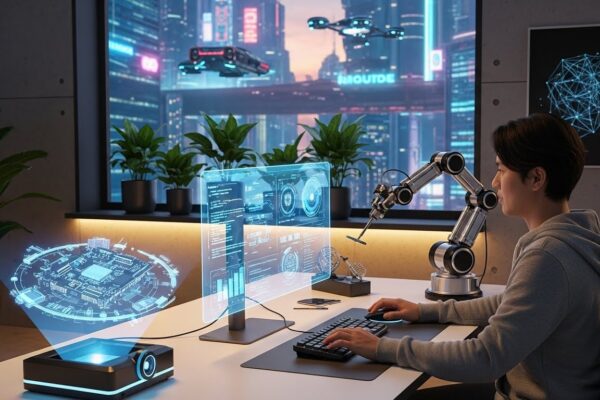
Technology is no longer just a part of our lives — it is the backbone of modern society, driving nearly every aspect of how we live, work, and interact with the world around us. From artificial intelligence to renewable energy, technology has revolutionized industries and transformed global economies. Today, we stand on the brink of even more profound changes, as new innovations continue to reshape the way we experience everyday life. In this blog post, we’ll explore some of the most significant tech trends currently shaping our world, the benefits and challenges they bring, and what the future may hold.
The Age of Artificial Intelligence: Revolutionizing Industries
Artificial intelligence (AI) has emerged as one of the most transformative forces in the tech landscape. Once a concept confined to science fiction, AI is now deeply embedded in various sectors, ranging from healthcare and finance to transportation and entertainment. AI refers to systems that can perform tasks that typically require human intelligence, such as understanding natural language, recognizing patterns, and making decisions.
AI in Healthcare
One of the most promising applications of AI is in the field of healthcare. Machine learning algorithms, a subset of AI, are being used to analyze medical data and assist in diagnosing diseases. AI can help detect early signs of illnesses like cancer, heart disease, and diabetes, often with greater accuracy than human doctors. AI-powered systems are also improving drug discovery, speeding up the process of developing new medications and therapies.
Telemedicine is another area where AI is making a significant impact. Virtual consultations, backed by AI, are becoming increasingly common, allowing patients to consult with doctors remotely and receive accurate diagnoses and prescriptions. Furthermore, AI-driven chatbots are helping healthcare providers triage patient inquiries, ensuring that people get the care they need in a timely manner.
AI in Business and Finance
AI is also revolutionizing the business world. In finance, AI algorithms are used for predictive analytics, helping investors make more informed decisions by analyzing market trends and patterns. In retail, AI is driving personalized shopping experiences, where recommendations are tailored to individual preferences based on past behavior. Virtual assistants, powered by AI, are becoming commonplace in customer service, providing users with instant responses and improving the overall customer experience.
However, while AI brings immense potential for efficiency and innovation, it also raises concerns, particularly regarding job displacement. As AI continues to automate routine tasks, there are questions about the future of employment and how workers can adapt to a rapidly changing job market. Ensuring that people are equipped with the necessary skills for this new age will be crucial in balancing the benefits and challenges of AI.
The 5G Revolution: Faster, Smarter, More Connected
As technology continues to evolve, so too does our ability to connect with each other and with the digital world around us. The rollout of 5G networks is one of the most exciting developments in the world of connectivity. 5G promises to bring faster speeds, lower latency, and more reliable connections than its predecessors, opening the door to new applications and industries that were once out of reach.
5G and the Internet of Things
One of the most significant implications of 5G is its role in advancing the Internet of Things (IoT). The IoT refers to a network of interconnected devices that can communicate with each other and share data. With 5G’s ultra-low latency and higher bandwidth, the IoT will expand exponentially. Imagine a world where smart homes, self-driving cars, and even entire cities are connected in real time, communicating with one another to optimize efficiency and convenience.
For example, smart cities powered by 5G will be able to use data collected from sensors and devices to monitor traffic flow, reduce energy consumption, and improve public services. In agriculture, 5G-enabled IoT devices can help farmers monitor crop health, automate irrigation, and even track livestock movements. This level of connectivity will make it easier to monitor and manage complex systems, driving sustainability and efficiency across industries.
5G in Healthcare
In healthcare, 5G will enable remote surgeries, telemedicine, and real-time monitoring of patient health. Surgeons will be able to perform procedures remotely with the help of robotic systems controlled via 5G networks, ensuring that patients in remote areas have access to life-saving medical care. Additionally, the ability to transmit high-quality medical images instantly will allow healthcare providers to make quicker, more informed decisions.
While 5G holds enormous potential, its widespread adoption comes with challenges. Governments and telecom companies must invest heavily in infrastructure to ensure that 5G networks are available globally. Additionally, the privacy and security of data transmitted over these networks must be safeguarded to protect users from potential breaches.
Quantum Computing: A Leap into the Future
Quantum computing is another groundbreaking technology that promises to change the world as we know it. Unlike traditional computers that process data using binary code (0s and 1s), quantum computers leverage the principles of quantum mechanics to process data in ways that classical computers cannot. Quantum computing is still in its infancy, but it holds immense potential to solve complex problems in fields ranging from cryptography and material science to artificial intelligence.
The Potential of Quantum Computing
Quantum computing’s power lies in its ability to solve problems that are currently beyond the capabilities of classical computers. For example, quantum computers could potentially crack encryption methods that would take traditional computers millions of years to decipher. In medicine, quantum computing could be used to simulate molecular interactions, leading to faster drug discovery and the development of personalized treatments. In logistics, quantum algorithms could optimize supply chains, reducing waste and improving efficiency on an unprecedented scale.
However, building a quantum computer is incredibly difficult, and we are still a long way from realizing its full potential. Researchers are working on developing stable quantum bits (qubits) and improving error-correction methods, both of which are essential for quantum computers to operate effectively. Despite the technical challenges, the progress being made in the field is remarkable, and quantum computing is expected to have transformative effects on many industries in the coming decades.
The Evolution of Work: Remote and Hybrid Models
The COVID-19 pandemic accelerated the shift toward remote and hybrid work models, a trend that looks set to continue long after the crisis subsides. Technology has been the primary enabler of this transition, with tools like video conferencing, cloud computing, and project management software becoming essential for businesses and employees alike.
Remote Work and Productivity
Remote work has allowed companies to tap into a global talent pool and reduce overhead costs associated with physical office spaces. For employees, it offers greater flexibility and work-life balance. Cloud-based collaboration tools like Google Drive, Microsoft Teams, and Slack have made it easier for teams to stay connected and work on projects in real time, regardless of location.
However, remote work also comes with its own set of challenges. For one, it can lead to feelings of isolation and burnout, especially for those who struggle to separate their personal and professional lives. Companies will need to invest in technology that fosters collaboration, maintains team morale, and supports mental health. Virtual team-building exercises, flexible hours, and mental wellness initiatives are becoming increasingly important in the remote work landscape.
The Role of AI in the Future of Work
As AI continues to evolve, it will play an increasingly important role in the workplace. From automating repetitive tasks to providing data-driven insights, AI has the potential to improve productivity and decision-making. For example, AI can analyze large sets of data and generate reports that would take human workers hours or days to compile. AI-powered chatbots can assist in customer service, allowing employees to focus on more complex tasks that require human judgment and empathy.
However, the rise of AI also raises concerns about job displacement. While automation can increase efficiency, it can also lead to the loss of certain jobs. The key will be ensuring that workers have the skills necessary to adapt to these changes. Upskilling and reskilling programs will become increasingly important as technology continues to evolve.
Sustainable Technology: Building a Greener Future
As the world grapples with the effects of climate change, technology is playing a critical role in building a more sustainable future. Innovations in clean energy, electric vehicles, and sustainable manufacturing practices are helping reduce our environmental footprint and create more efficient systems.
Renewable Energy
One of the most promising areas of sustainable technology is renewable energy. Solar, wind, and hydroelectric power are becoming more affordable and efficient, and new breakthroughs in energy storage technologies are making it possible to store renewable energy for use when the sun isn’t shining or the wind isn’t blowing. This shift toward renewable energy is essential for reducing our reliance on fossil fuels and mitigating the impacts of climate change.
Electric Vehicles and Smart Grids
Electric vehicles (EVs) are another critical piece of the sustainability puzzle. With advancements in battery technology, EVs are becoming more affordable, efficient, and practical for everyday use. As charging infrastructure continues to improve, EV adoption is expected to grow, contributing to cleaner air and reducing greenhouse gas emissions from the transportation sector.
Smart grids, powered by AI and IoT, are helping to optimize energy consumption by monitoring and controlling the distribution of electricity in real-time. This enables more efficient use of energy resources and reduces waste, making the entire energy system more sustainable.
Conclusion: A World Transformed by Technology
The rapid pace of technological innovation is transforming our world in ways that were once unimaginable. From AI and 5G to quantum computing and sustainable energy, technology is driving change across industries and shaping the future of work, healthcare, transportation, and beyond. While these advancements present new opportunities, they also come with challenges that must be addressed responsibly.
As we embrace the future, it’s essential to focus on how we can harness technology for the greater good. This means ensuring that the benefits of these innovations are accessible to all, preparing the workforce for the changes ahead, and addressing the ethical implications of emerging technologies. By navigating these challenges thoughtfully, we can create a future where technology not only improves our lives but also contributes to a more sustainable and equitable world.