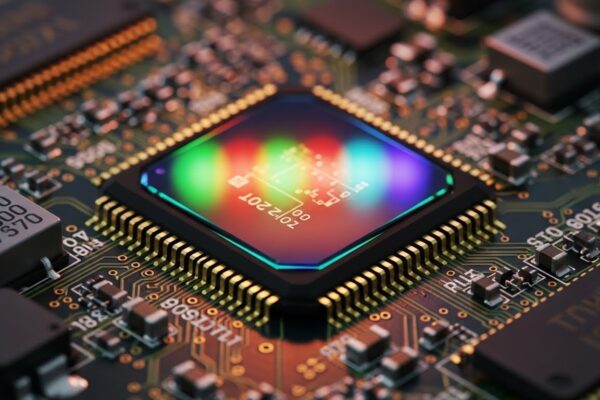
Artificial Intelligence (AI) has become an integral part of our daily lives, yet its full potential is still unfolding. In recent years, AI has shifted from a niche field of research to a mainstream technology, impacting a range of industries from healthcare to entertainment and finance. But what does the future hold for AI? How will it shape our routines, work environments, and interactions? In this blog post, we’ll take a deep dive into the evolving role of AI, its potential applications, and how it could revolutionize the way we live.
The Evolution of AI: From Science Fiction to Everyday Technology
Historically, Artificial Intelligence was considered the realm of science fiction. Movies and books portrayed sentient machines with human-like capabilities that would either save or destroy humanity. However, as computing power increased and algorithms advanced, AI began to move out of the realm of imagination into the world of reality.
The journey of AI’s evolution started in the 1950s when Alan Turing, a British mathematician and computer scientist, introduced the concept of a machine capable of simulating any human intelligence. Turing’s groundbreaking work laid the foundation for the field of artificial intelligence. From then on, AI researchers have continuously developed smarter algorithms, stronger machine learning models, and more advanced hardware that have shaped the AI landscape as we know it today.
Fast forward to the present day, and AI is already playing a role in numerous sectors. Voice assistants like Siri and Alexa, recommendation engines on platforms like Netflix and Amazon, and even self-driving cars, are just some examples of AI technologies we use on a daily basis. However, this is just the tip of the iceberg. As the field of AI continues to mature, it is poised to take on even more sophisticated roles.
Understanding the Core of AI: Machine Learning and Deep Learning
AI can be broken down into several subfields, with two of the most prominent being Machine Learning (ML) and Deep Learning (DL). Understanding these concepts is key to appreciating how AI will continue to evolve.
Machine Learning refers to a subset of AI that focuses on algorithms that allow machines to improve their performance by learning from data. Instead of being explicitly programmed for every task, a machine learning model “learns” from historical data and improves its predictions over time. Common applications of machine learning include spam email filters, fraud detection, and facial recognition technology.
Deep Learning, a more advanced subset of machine learning, leverages neural networks—systems inspired by the human brain’s structure. These neural networks are capable of analyzing vast amounts of data and recognizing intricate patterns. Deep learning has powered breakthroughs in image and speech recognition, natural language processing, and autonomous vehicles.
Both machine learning and deep learning are the building blocks that will drive much of AI’s advancement in the coming years. But what does this mean for us as everyday users?
AI’s Impact on Personal Technology: The Smart Home Revolution
One of the most exciting areas where AI will make a profound difference is in the smart home ecosystem. Over the next decade, homes are expected to become increasingly automated, with AI technologies playing a pivotal role in this transformation.
Voice assistants like Amazon’s Alexa, Google Assistant, and Apple’s Siri are just the beginning. These AI systems are capable of recognizing voice commands and controlling smart devices like thermostats, lights, security cameras, and more. However, as AI technology advances, these systems will evolve to become more intuitive and intelligent. For instance, future AI assistants will likely anticipate your needs before you even make a request.
Imagine a home that adjusts its temperature based on your habits or one that orders groceries for you when it notices your pantry running low. AI-powered smart homes will be able to learn from your preferences and routines, making them more efficient and personalized. The integration of predictive analytics will allow these systems to foresee future requirements, essentially making your home ‘smarter’ and more attuned to your lifestyle.
Furthermore, AI-driven security systems are expected to become more sophisticated. Cameras and sensors will not only monitor your home but will also be capable of identifying faces, detecting unusual behaviors, and even distinguishing between a friendly visitor and an intruder. This level of advanced AI could greatly enhance home safety and security in ways that were once unthinkable.
AI in Healthcare: The Path to Personalized Medicine
AI is poised to revolutionize healthcare, with profound implications for both medical professionals and patients. One of the most exciting advancements is the use of AI for personalized medicine.
With AI’s ability to process and analyze large datasets, it can help doctors tailor treatments based on an individual’s genetic makeup, lifestyle, and environment. For instance, AI models can analyze a patient’s genetic data and suggest the most effective treatment options, reducing the trial-and-error approach that is often used in medicine today. Additionally, AI can help detect diseases earlier by analyzing medical imaging such as X-rays and MRIs with greater accuracy than the human eye.
Furthermore, AI-powered wearable devices, such as smartwatches and fitness trackers, can monitor a person’s vital signs and offer real-time feedback. These devices are already capable of tracking heart rate, sleep patterns, and physical activity, but future AI systems will be able to predict health risks before they manifest. This could lead to earlier detection of conditions like heart disease, diabetes, and even cancer.
Moreover, AI-powered robots may soon assist in surgeries, providing doctors with greater precision and minimizing human error. These robots will be guided by AI systems that analyze data in real-time, ensuring that the procedure goes as smoothly as possible. The integration of AI into surgery could result in faster recovery times and improved patient outcomes.
The Future of AI in Transportation: Autonomous Vehicles
One of the most widely discussed applications of AI in recent years is in autonomous vehicles. Self-driving cars have the potential to revolutionize transportation, making it safer, more efficient, and less reliant on human drivers. The technology behind autonomous vehicles is based on machine learning algorithms, deep learning neural networks, and sensor technologies like LiDAR (Light Detection and Ranging).
At the heart of self-driving vehicles is the ability to make real-time decisions based on a constant stream of data from cameras, radar, and other sensors. These AI systems process this data to recognize objects, identify traffic patterns, and make decisions about speed, route, and driving maneuvers.
While fully autonomous vehicles are not yet widely available, they are rapidly evolving. Companies like Tesla, Waymo, and others are investing heavily in AI to bring self-driving cars to the market. In the coming years, we can expect more cities and countries to test and deploy these vehicles, potentially reducing traffic accidents caused by human error and improving overall traffic flow.
Beyond personal vehicles, AI-powered autonomous public transportation systems could change the way we commute. Self-driving buses and trains could operate more efficiently, with AI optimizing routes based on demand and traffic conditions. In urban areas, this could lead to less congestion, more efficient public transport systems, and reduced carbon emissions.
Ethical Considerations: The Challenges of AI
While AI holds immense promise, it also brings with it a range of ethical challenges. One of the most pressing concerns is privacy. As AI becomes more integrated into our lives, the amount of personal data collected will increase exponentially. From location data to personal preferences, AI systems will have access to a wealth of sensitive information. Ensuring that this data is protected and used responsibly is crucial.
Another concern is the potential for AI to perpetuate bias. Since AI systems learn from data, if the data they are trained on contains biases, these biases can be reflected in the AI’s decisions. This has been seen in various AI applications, from hiring algorithms that favor certain demographics to facial recognition systems that struggle with racial diversity.
Additionally, there is the question of job displacement. As AI becomes more capable, it could replace human workers in various industries, leading to economic disruption. Automation in sectors like manufacturing, retail, and customer service has already begun, and the concern is that AI could further erode job opportunities for workers.
To address these challenges, ongoing discussions and collaborations between governments, businesses, and technologists are needed. Ensuring that AI is developed ethically and responsibly will be key to its success and acceptance in society.
The Road Ahead: What’s Next for AI?
The future of AI is undoubtedly exciting, but we are only scratching the surface of what is possible. As technology advances, AI will continue to become more integrated into every aspect of our lives, from personalized health treatments to intelligent transportation systems.
One area that shows significant potential is AI in creativity. Artists, musicians, and writers are already experimenting with AI-generated content, whether it’s composing music, creating digital art, or writing novels. AI could help creatives push the boundaries of their work by offering new tools and possibilities.
Additionally, as AI continues to evolve, it is likely that we will see the rise of artificial general intelligence (AGI)—machines that possess the ability to perform any intellectual task that a human can do. While AGI is still a long way off, it remains a topic of great interest for researchers and scientists. If realized, AGI could transform society in unimaginable ways.
Conclusion: Embracing the Future of AI
As we move further into the 21st century, AI will undoubtedly continue to shape the way we live, work, and interact. Its potential to improve our quality of life is immense, from smarter homes to personalized healthcare and autonomous transportation. However, the rapid advancement of AI also brings with it challenges that must be addressed responsibly.
By ensuring ethical development, fostering transparency, and embracing innovation, we can create a future where AI enhances human potential rather than diminishes